Perbandingan Metode Pemulihan: Rendaman Kaki di Es vs. Istirahat Aktif Pasca Latihan Lari 12 Menit Mahasiswa PKO UPRI
Keywords:
Ice water immersion, Active recovery, Exercise recovery, Sports coaching education, Running performanceAbstract
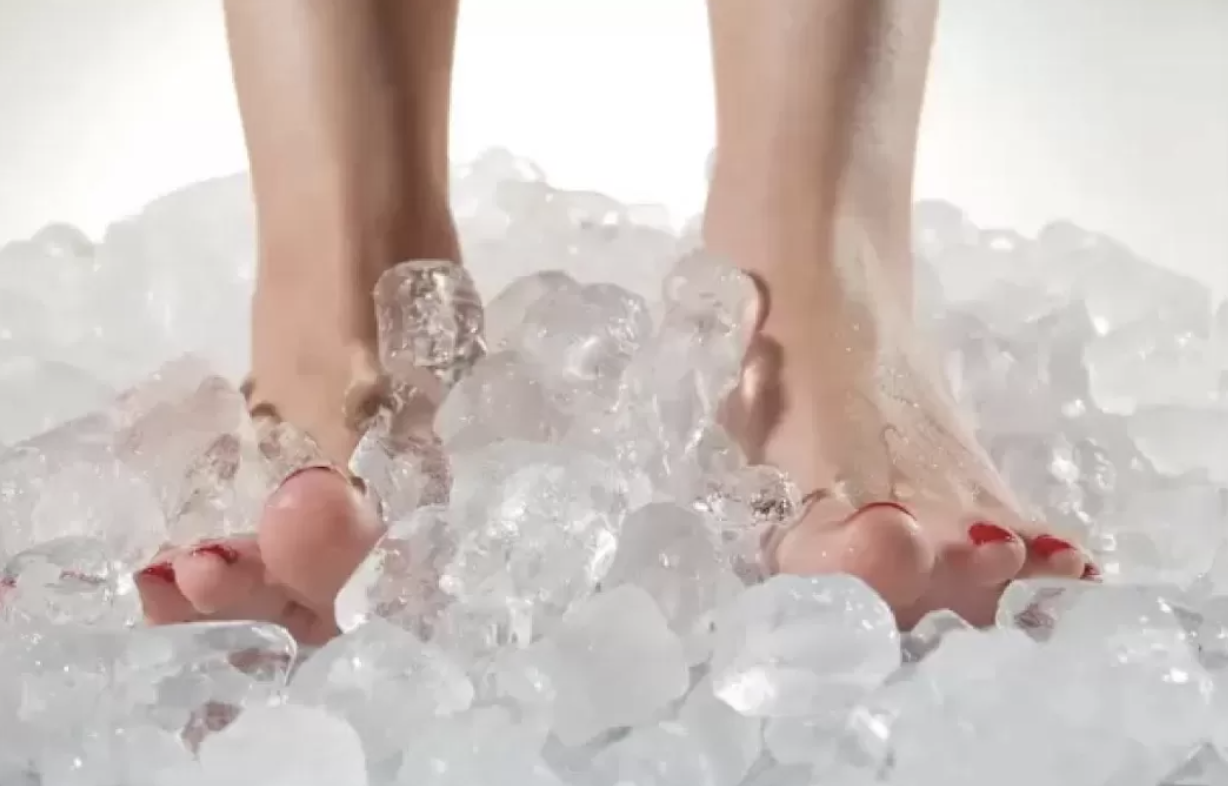
This study aims to compare the effectiveness of ice water immersion versus active recovery methods on recovery after 12-minute running exercise in sports coaching education students. This research used a quasi-experimental design with a sample of 30 students divided into two groups: ice water immersion group (n=15) and active recovery group (n=15). Recovery parameters measured included heart rate recovery, blood lactate levels, and perceived exertion scale. Data were analyzed using independent t-test and paired t-test with significance level p<0.05. The results showed that both recovery methods were effective in reducing heart rate and blood lactate levels post-exercise. However, the ice water immersion group showed significantly faster heart rate recovery (p=0.032) and lower lactate clearance time (p=0.028) compared to the active recovery group. The active recovery group showed better subjective recovery perception (p=0.041). This study concludes that ice water immersion is more effective for physiological recovery, while active recovery provides better psychological comfort in post-exercise recovery.
References
Arba, M. A. (2025). Pengaruh keseimbangan terhadap kelincahan dalam permainan sepakbola pada pemain SSB Bajeng United Gowa. Jurnal Pendidikan Kepelatihan Olahraga (PEJUANG), 1(1), 24–29.
Arba, M. A., Rerung, C. T., Hasanuddin, M. I., & Hasyim, M. Q. (2025). Pelatihan sepak bola berbasis permainan untuk meningkatkan kerjasama tim di kalangan siswa SD Negeri 156 Buntu. Jurnal Perjuangan dan Pengabdian Masyarakat: JPPM, 1(1), 26–34.
Arga, A. (2025). Pengaruh latihan leg raise terhadap kekuatan otot perut mahasiswa PKO UPRI. Jurnal Pendidikan Kepelatihan Olahraga (PEJUANG), 1(1), 18–23.
Aulria, S. N. M. (2025). Renang gaya bebas 50 meter ditinjau dari kekuatan otot lengan atlet Garuda Laut usia 10 tahun. Jurnal Pendidikan Kepelatihan Olahraga (PEJUANG), 1(1), 6–11.
Ba, H. (2020). Medical sports rehabilitation deep learning system of sports injury based on MRI image analysis. Journal of Medical Imaging and Health Informatics, 10(5), 1091–1097. [https://doi.org/10.1166/jmihi.2020.2892](https://doi.org/10.1166/jmihi.2020.2892)
Badwi, A., Arba, M. A., Rahmatullah, W., Rerung, C. T., Aulria, S. N. M., Arga, A., & Hasran, H. (2025). Socialization of Petanque sports at SMAS YASPIB Bontolempangan Gowa. Jurnal Perjuangan dan Pengabdian Masyarakat: JPPM, 1(2), 1–8.
Bleakley, C., McDonough, S., Gardner, E., Baxter, G. D., Hopkins, J. T., & Davison, G. W. (2012). Cold-water immersion (cryotherapy) for preventing and treating muscle soreness after exercise. Cochrane Database of Systematic Reviews, (2). [https://doi.org/10.1002/14651858.CD008262.pub2](https://doi.org/10.1002/14651858.CD008262.pub2)
Calleja-González, J., Sánchez-Ureña, B., Terrados, N., Schelling, X., Mielgo-Ayuso, J., Arratibel, I., Sampaio, J., Ostojic, S. M., Dupont, G., Marques-Jiménez, D., & Delextrat, A. (2018). Brief ideas about evidence-based recovery in team sports. Journal of Exercise Rehabilitation, 14(4), 545–550. [https://doi.org/10.12965/jer.1836244.122](https://doi.org/10.12965/jer.1836244.122)
Del Coso, J., Estevez, E., Baquero, R. A., & Mora-Rodriguez, R. (2008). Anaerobic performance when rehydrating with water or commercially available sports drinks during prolonged exercise in the heat. Applied Physiology, Nutrition, and Metabolism, 33(2), 290–298. [https://doi.org/10.1139/H07-188](https://doi.org/10.1139/H07-188)
Dupuy, O., Douzi, W., Theurot, D., Bosquet, L., & Dugué, B. (2018). An evidence-based approach for choosing post-exercise recovery techniques to reduce markers of muscle damage, soreness, fatigue and inflammation: A systematic review with meta-analysis. Frontiers in Physiology, 9, 403. [https://doi.org/10.3389/fphys.2018.00403](https://doi.org/10.3389/fphys.2018.00403)
García-Hermoso, A., Cerrillo-Urbina, A. J., & Herrera-Valenzuela, T. (2016). Is high-intensity interval training more effective on improving cardiometabolic risk and aerobic capacity than other forms of exercise in overweight and obese youth? A meta-analysis. Obesity Reviews, 17(6), 531–540. [https://doi.org/10.1111/obr.12395](https://doi.org/10.1111/obr.12395)
Hausswirth, C., & Mouthon, J. (2006). Strategies for improving post-exercise recovery. Sports Medicine, 36(9), 747–766. [https://doi.org/10.2165/00007256-200636090-00001](https://doi.org/10.2165/00007256-200636090-00001)
Hudain, M. A., Adil, A., Kasmad, M. R., & Arga, A. (2025). Pelatihan terstruktur di SDN Paccinangan tentang dribbling bola basket. Litera Abdi: Jurnal Pengabdian Masyarakat, 2(1), 88–95.
Ihsan, M., Watson, G., & Abbiss, C. R. (2016). What are the physiological mechanisms for post-exercise cold water immersion in the recovery from prolonged endurance and intermittent exercise? Sports Medicine, 46(8), 1095–1109. [https://doi.org/10.1007/s40279-016-0483-3](https://doi.org/10.1007/s40279-016-0483-3)
Juhanis, J., Nur, M., Mappaompo, M. A., Hudain, M. A., Azis, A., & Arga, A. (2023). Pengaruh latihan push up normal dan push up tangan ditinggikan terhadap keterampilan passing atas dalam permainan bolavoli siswa ekstrakurikuler Bolavoli SMP Negeri 1 Makassar. Jurnal Ilmiah Mandala Education, 9(3), 1792–1798.
Kenttä, G., & Hassmén, P. (1998). Overtraining and recovery: A conceptual model. Sports Medicine, 26(1), 1–16. [https://doi.org/10.2165/00007256-199826010-00001](https://doi.org/10.2165/00007256-199826010-00001)
Leeder, J., Gissane, C., van Someren, K., Gregson, W., & Howatson, G. (2012). Cold water immersion and recovery from strenuous exercise: A meta-analysis. British Journal of Sports Medicine, 46(4), 233–240. [https://doi.org/10.1136/bjsports-2011-090061](https://doi.org/10.1136/bjsports-2011-090061)
Liu, Y., Yue, S., Wang, X., Wang, S., & Wang, F. (2023). Effects of cold water immersion after exercise on fatigue recovery and exercise performance—meta analysis. Frontiers in Physiology, 14, 1006512. [https://doi.org/10.3389/fphys.2023.1006512](https://doi.org/10.3389/fphys.2023.1006512)
Machado, A. F., Ferreira, P. H., Micheletti, J. K., de Almeida, A. C., Lemes, Í. R., Vanderlei, F. M., & Pastre, C. M. (2016). Can water temperature and immersion time influence the effect of cold water immersion on muscle soreness? A systematic review and meta-analysis. Sports Medicine, 46(4), 503–514. [https://doi.org/10.1007/s40279-015-0431-7](https://doi.org/10.1007/s40279-015-0431-7)
Mappaompo, M. A., Aprilo, I., Arfanda, P. E., & Arga, A. (2024). Shooting accuracy of sports coaching education students: Goaling game practice. ETDC: Indonesian Journal of Research and Educational Review, 3(3), 204–210.
Parwata, I. M. Y. (2015). Kelelahan dan recovery dalam olahraga. Jurnal Pendidikan Kesehatan Rekreasi, 1(1), 2–13.
Pournot, H., Bieuzen, F., Duffield, R., Lepretre, P. M., Cozzolino, C., & Hausswirth, C. (2011). Short term effects of various water immersions on recovery from exhaustive intermittent exercise. European Journal of Applied Physiology, 111(7), 1287–1295. [https://doi.org/10.1007/s00421-010-1754-6](https://doi.org/10.1007/s00421-010-1754-6)
Rahmatullah, W. (2025). Efektivitas program latihan interval tinggi (HIIT) terhadap peningkatan kebugaran kardiorespirasi pada mahasiswa PKO UPRI. Jurnal Pendidikan Kepelatihan Olahraga (PEJUANG), 1(1), 12–17.
Rerung, C. T. (2025). Kemampuan roll depan ditinjau dari kelenturan otot perut mahasiswa Kepelatihan Olahraga Universitas Pejuang Republik Indonesia. Jurnal Pendidikan Kepelatihan Olahraga (PEJUANG), 1(1), 1–5.
Rustiawan, H. (2020). Pengaruh latihan interval training dengan running circuit terhadap peningkatan VO2Max. Jurnal Wahana Pendidikan, 7(1), 15–28.
Setiawan, B. (2023). Pengaruh intensitas latihan ringan dan tinggi terhadap daya tahan pada siswa putra ekstrakurikuler sepak bola SMA Negeri 1 Kalirejo.
Sousa, C. A., Zourdos, M. C., Storey, A. G., & Helms, E. R. (2024). The importance of recovery in resistance training microcycle construction. Journal of Human Kinetics, 91, 205–223. [https://doi.org/10.5114/jhk/186659](https://doi.org/10.5114/jhk/186659)
Vaile, J., Halson, S., Gill, N., & Dawson, B. (2008). Effect of hydrotherapy on the signs and symptoms of delayed onset muscle soreness. European Journal of Applied Physiology, 102(4), 447–455. [https://doi.org/10.1007/s00421-007-0605-6](https://doi.org/10.1007/s00421-007-0605-6)
Versey, N. G., Halson, S. L., & Dawson, B. T. (2013). Water immersion recovery for athletes: Effect on exercise performance and practical recommendations. Sports Medicine, 43(11), 1101–1130. [https://doi.org/10.1007/s40279-013-0063-8](https://doi.org/10.1007/s40279-013-0063-8)
Wilcock, I. M., Cronin, J. B., & Hing, W. A. (2006). Physiological response to water immersion: A method for sport recovery? Sports Medicine, 36(9), 747–765. [https://doi.org/10.2165/00007256-200636090-00003](https://doi.org/10.2165/00007256-200636090-00003)
Zhang, Y., Davis, J. K., Casa, D. J., & Bishop, P. A. (2015). Optimizing cold water immersion for exercise-induced hyperthermia: A meta-analysis. Medicine & Science in Sports & Exercise, 47(11), 2464–2472. [https://doi.org/10.1249/MSS.0000000000000698](https://doi.org/10.1249/MSS.0000000000000698)