
The Effects of IDEAL-Based Teaching on Cognitive Failure and Selected Fundamental Basketball Skills Among Students
DOI:
https://doi.org/10.66968/08szs866Keywords:
IDEAL Model, Cognitive Failure, Basketball, Basic Skills, Motor LearningAbstract
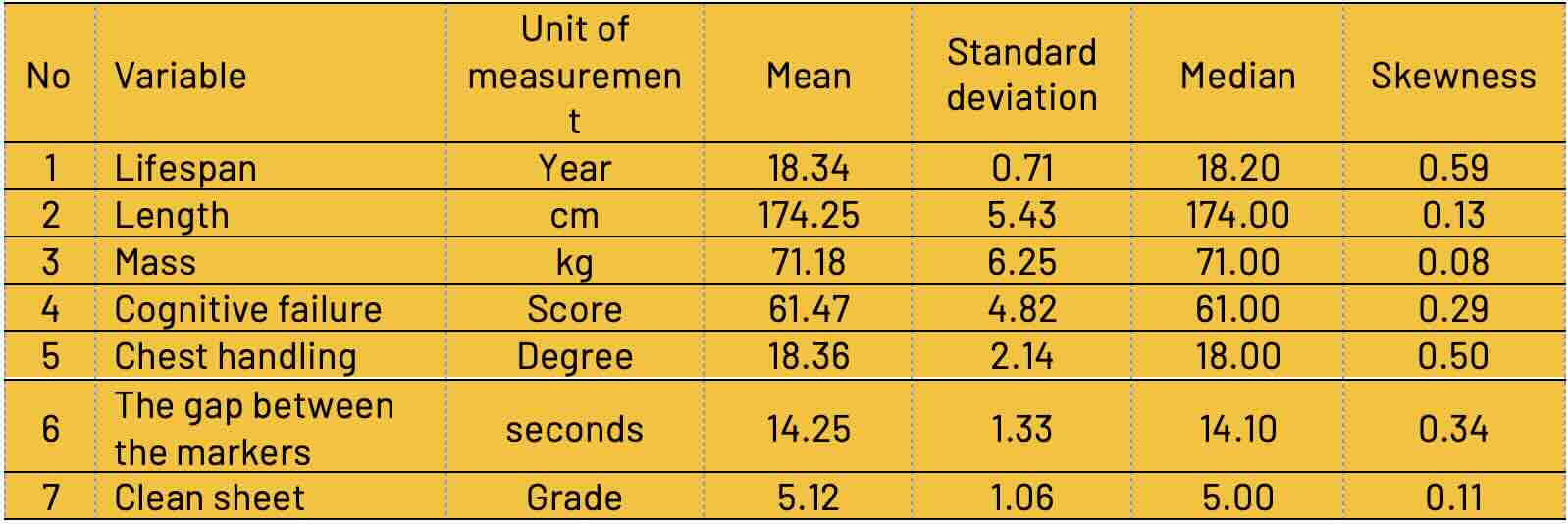
This study examined the effectiveness of an educational programme developed according to the IDEAL model in reducing cognitive errors and facilitating the acquisition of certain basic basketball skills amongst students. An experimental design was adopted, involving two groups assessed via pre- and post-tests. The study population consisted of first-year students from the Faculty of Physical Education and Sports Science at the University of Samarra during the 2025–2026 academic year. A sample of 40 students was randomly assigned to two equivalent groups, with 20 students allocated to the experimental group and 20 to the control group. Students in the experimental group received instruction through a teaching programme structured around the IDEAL model, whilst those in the control group continued with the teaching programme delivered by the subject lecturer. The Cognitive Failures Scale and a series of basketball skills tests were used to assess the participants. The skills tests focused on chest dribbling, dribbling between cones, lay-ups and free throws. The results showed that participation in the teaching programme based on the IDEAL model was associated with a reduction in cognitive errors and an improvement in the acquisition of selected basic basketball skills. Based on these findings, the study recommends integrating contemporary teaching models that promote thinking and problem-solving into physical education lessons, as they can contribute to the development of students’ cognitive and motor skills.
References
Al-Bayati, Abdul Jabbar, Statistics and its Applications in Physical Education, Higher Education Press, Baghdad, 2007.
Al-Samara’i, Kamal, Methods of Scientific Research, Dar Al-Kutub for Printing and Publishing, Baghdad, 2011.
Allawi, Muhammad Hassan, Motor Learning, Dar al-Fikr al-Arabi, Cairo, 2004.
Allawi, Muhammad Hassan, Sports Psychology, Dar al-Fikr al-Arabi, Cairo, 1998.
Bransford, J., & Stein, B., The IDEAL Problem Solver, W.H. Freeman and Company, New York, 1984.
Broadbent, D. E., Cooper, P. F., Fitzgerald, P., & Parkes, K. R., “The Cognitive Failures Questionnaire (CFQ) and its correlates”, British Journal of Clinical Psychology, Vol. 21, No. 1, 1982.
Foreign Sources
Joyce, B., Weil, M., & Calhoun, E., Models of Teaching, 10th Edition, Pearson Education, Boston, 2020.
Magill, R., & Anderson, D., Motor Learning and Control: Concepts and Applications, 13th Edition, McGraw-Hill, New York, 2022.
Qatami, Youssef, Cognitive Learning and Teaching Strategies, Dar al-Fikr, Amman, 2001.
Schmidt, R., & Lee, T., Motor Learning and Performance, 6th Edition, Human Kinetics, 2020.
Schraw, G., Educational Psychology: Theory and Practice, 3rd Edition, Routledge, London, 2021.
Weinstein, C., Learning and Study Strategies: Issues in Assessment, Instruction, and Evaluation, Academic Press, 2021.
Downloads
Published
Issue
Section
License
Copyright (c) 2026 Ayad Ghani Jasim (Author)

This work is licensed under a Creative Commons Attribution-ShareAlike 4.0 International License.