On The Job Training Assistance at UPTD SDN 34 Pakere to Improve Teacher Competence in Physical Activity-Based Learning
Keywords:
On The Job Training, Teacher Competency Development, Physical Activitybased Learning, Physical Education, Elementary SchoolAbstract
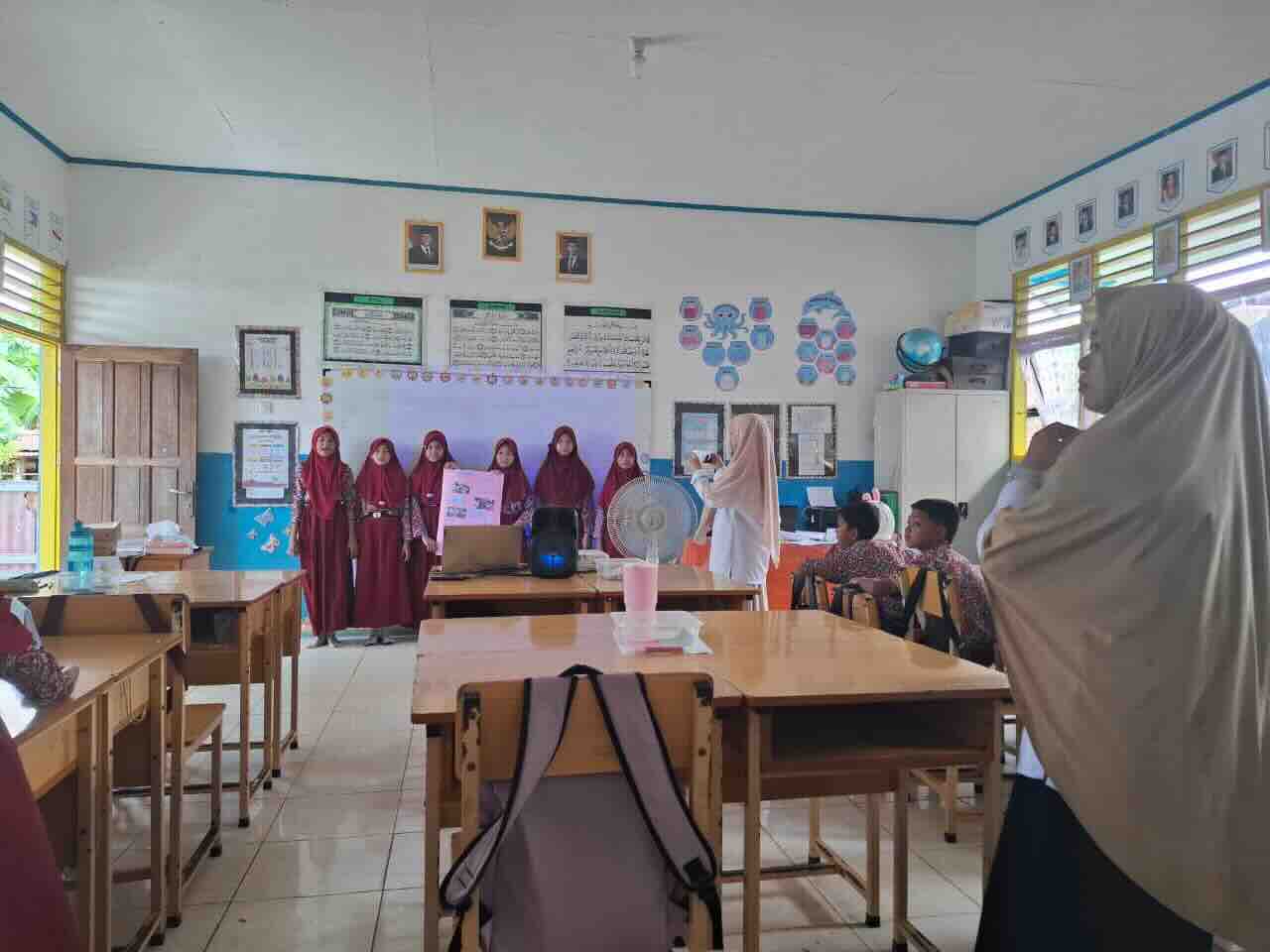
Teachers are the main actors in implementing effective and meaningful learning for students. At UPTD SDN 34 Pakere, teachers have shown high dedication in carrying out their teaching duties but still face challenges in integrating physical activities into daily learning processes. Limited understanding of physical activity-based learning methods and lack of practical experience in implementing them are the main obstacles. This Community Service activity aims to improve teacher competence through on-the-job training (OJT) assistance in integrating physical activities into classroom learning. The implementation method uses a descriptiveparticipatory approach involving 12 teachers from UPTD SDN 34 Pakere. The activity was carried out through stages of socialization, practical workshops, implementation assistance in the classroom, and joint reflection. Data collection techniques were carried out qualitatively through direct observation, interviews, and activity documentation. The results showed that OJT assistance was able to increase teachers’ understanding of the importance of integrating physical activity in learning, improve practical skills in designing and implementing physical activitybased learning, and increase teachers’ confidence in innovating in the classroom. Teachers began to understand that physical activity is not only important for student health, but can also improve concentration, learning motivation, and student learning outcomes. The OJT approach that provides direct assistance in the field has proven effective in helping teachers overcome technical barriers and improve the implementation of more active and enjoyable learning. This activity shows that OJT assistance can be an applicable and sustainable teacher professional development strategy in elementary school environments.
References
Arga, A., & Fitri, R. (2025). Peningkatan Kemampuan Motorik Kasar Melalui Permainan Interaktif Di TK Thalabul Ilmi. SPORTIVE: Journal Of Physical Education, Sport and Recreation, 9(6), 273–283.
Badwi, A., Arba, M. A., Rahmatullah, W., Rerung, C. T., Aulria, S. N. M., Arga, A., & Hasran, H. (2025). Socialization of Petanque Sports at SMAS YASPIB Bontolempangan Gowa. Jurnal Perjuangan Dan Pengabdian Masyarakat: JPPM, 1(2), 1–8.
Bailey, R., Armour, K., Kirk, D., Jess, M., Pickup, I., Sandford, R., & BERA Physical Education and Sport Pedagogy Special Interest Group. (2009). The educational benefits claimed for physical education and school sport: An academic review. Research Papers in Education, 24(1), 1–27. https://doi.org/10.1080/02671520701809817
Darling-Hammond, L., Hyler, M. E., & Gardner, M. (2017). Effective Teacher Professional Development. Learning Policy Institute.
Desimone, L. M. (2009). Improving Impact Studies of Teachers’ Professional Development: Toward Better Conceptualizations and Measures. Educational Researcher, 38(3), 181–199. https://doi.org/10.3102/0013189X08331140
Donnelly, J. E., Hillman, C. H., Castelli, D., Etnier, J. L., Lee, S., Tomporowski, P., Lambourne, K., & Szabo-Reed, A. N. (2016). Physical Activity, Fitness, Cognitive Function, and Academic Achievement in Children: A Systematic Review. Medicine and Science in Sports and Exercise, 48(6), 1197–1222. https://doi.org/10.1249/MSS.0000000000000901
DuFour, R., & Eaker, R. (1998). Professional Learning Communities at Work: Best Practices for Enhancing Student Achievement. ASCD.
Hillman, C. H., Erickson, K. I., & Kramer, A. F. (2008). Be smart, exercise your heart: Exercise effects on brain and cognition. Nature Reviews Neuroscience, 9(1), 58–65. https://doi.org/10.1038/nrn2298
Jacobs, R. L., & Bu-Rahmah, M. J. (2012). Developing employee expertise through structured on-the-job training (S-OJT): An introduction to this training approach and the KNPC experience. Industrial and Commercial Training, 44(2), 75–84. https://doi.org/10.1108/00197851211202902
Kemendikbud. (2020). Standar Nasional Pendidikan. Kementerian Pendidikan dan Kebudayaan Republik Indonesia.
Kolb, D. A. (1984). Experiential Learning: Experience As The Source Of Learning And Development. Prentice Hall.
Kraft, M. A., Blazar, D., & Hogan, D. (2018). The Effect of Teacher Coaching on Instruction and Achievement: A Meta-Analysis of the Causal Evidence. Review of Educational Research, 88(4), 547–588. https://doi.org/10.3102/0034654318759268
Mavilidi, M. F., Okely, A. D., Chandler, P., Cliff, D. P., & Paas, F. (2018). Effects of Integrating Physical Activities Into a Science Lesson on Preschool Children’s Learning and Enjoyment. Applied Cognitive Psychology, 32(2), 281–290. https://doi.org/10.1002/acp.3388
Mullender-Wijnsma, M. J., Hartman, E., de Greeff, J. W., Bosker, R. J., Doolaard, S., & Visscher, C. (2015). Improving Academic Performance of School-Age Children by Physical Activity in the Classroom: 1-Year Program Evaluation. Journal of School Health, 85(6), 365–371. https://doi.org/10.1111/josh.12259
Rerung, C. T., Aulria, S. N. M., Hudain, M. A., & Mappaompo, M. A. (2025). Pelatihan Teknik Dasar Taekwondo untuk Meningkatkan Motorik dan Percaya Diri Siswa SDN Inpres 127 Moncongloe. Jurnal Perjuangan Dan Pengabdian Masyarakat: JPPM, 1(1), 35–42.
Voogt, J., & Roblin, N. P. (2012). A comparative analysis of international frameworks for 21st century competences: Implications for national curriculum policies. Journal of Curriculum Studies, 44(3), 299–321. https://doi.org/10.1080/00220272.2012.668938
Webster, C. A., Russ, L., Vazou, S., Goh, T. L., & Erwin, H. (2015). Integrating movement in academic classrooms: Understanding, applying and advancing the knowledge base. Obesity Reviews, 16(8), 691–701. https://doi.org/10.1111/obr.12285