Development and Standardization of a Scale Measuring the Entrepreneurial Leadership Characteristics of Board Members of Clubs in the Iraqi Stars League
DOI:
https://doi.org/10.66968/pejuang.9ww2tq17Keywords:
Entrepreneurial leadership, Iraqi Stars League, Scale standardization, Psychometrics, Sports club governanceAbstract
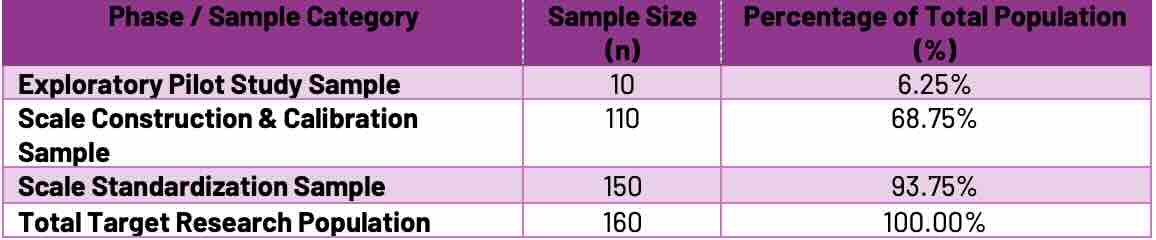
The primary objective of this study was to construct and standardize a psychometrically robust scale measuring the entrepreneurial leadership characteristics of board members within clubs participating in the Iraqi Stars League, as well as to derive standardized scores (Z-scores and T-scores) and establish normative performance tiers for practical administrative diagnosis. Employing a descriptive survey methodology, the research targeted the entire population of administrative board members across all 20 professional clubs competing in the 2024–2025 season (N = 160). The sample structure was systematically organized across three developmental phases: an exploratory pilot sample (n = 10, 6.25%), a scale construction sample (n = 110, 68.75%), and a scale standardization sample (n = 150, 93.75%). Content and face validity were verified by an expert panel of 17 university professors in sports administration and psychometrics using Chi-square (χ²) goodness-of-fit tests, confirming five theoretical domains: Creativity and Innovation, Strategic Leadership, Problem-Solving Competence, Calculated Risk-Taking, and Perseverance and Tenacity. Statistical item analysis utilizing the extreme groups method (upper vs. lower 27%, df = 58) demonstrated high discriminant power across items (p < 0.001). Internal consistency was established through item-total and item-domain Pearson correlation coefficients, resulting in the retention of 35 finalized items. Reliability analysis demonstrated high stability via the split-half method corrected by the Guttman formula (r = 0.756) and an exceptional Cronbach’s alpha coefficient (α = 0.991). Normative calibration on the standardization sample (M = 97.82, SD = 9.47, Skewness = 0.603) yielded five standard tiers: Very Good (4.66%), Good (13.33%), Average (70.00%), Acceptable (12.00%), and Poor (0.00%). The findings confirm that board members possess solid entrepreneurial leadership competencies, predominantly concentrated in average-to-high performance tiers. The study recommends adopting the standardized scale as a diagnostic benchmark for club governance, establishing leadership development programs, and incentivizing entrepreneurial venture creation in Iraqi professional sports.
References
Anastasi, A., & Urbina, S. (1997). Psychological testing (7th ed.). Prentice Hall.
Bandura, A. (1986). Social foundations of thought and action: A social cognitive theory. Prentice-Hall.
Caza, A. (2012). Context-dependent authentic leadership: The dynamic interplay of leadership and culture. Journal of Leadership & Organizational Studies, 19(4), 405–418. https://doi.org/10.1177/1548051812457818
Chelladurai, P., & Kerwin, S. (2018). Human resource management in sport and recreation (3rd ed.). Human Kinetics.
Covin, J. G., & Slevin, D. P. (2017). The entrepreneurial orientation construct: A history of its measurement and an agenda for future research. Entrepreneurship Theory and Practice, 41(3), 327–344. https://doi.org/10.1111/etap.12270
Creswell, J. W., & Creswell, J. D. (2018). Research design: Qualitative, quantitative, and mixed methods approaches (5th ed.). SAGE Publications.
Escamilla-Fajardo, P., Núñez-Pomar, J. M., & Ratten, V. (2020). Entrepreneurship and innovation in sports management: A systematic review. Sustainability, 12(11), 4704. https://doi.org/10.3390/su12114704
Kuratko, D. F. (2017). Corporate entrepreneurship: Accelerating creativity and innovation in organizations. Foundations and Trends in Entrepreneurship, 13(6), 441–567. https://doi.org/10.1561/0300000078
Nunnally, J. C., & Bernstein, I. H. (1994). Psychometric theory (3rd ed.). McGraw-Hill.
Ratten, V. (2020). Sport entrepreneurship: Developing and sustaining a competitive advantage. Springer Nature. https://doi.org/10.1007/978-981-15-8703-0
Sadiq, G. M. (1990). The psychology of sports leadership and administrative development. Dar Al-Hikma for Publishing and Distribution.
Scott, D. (2022). Contemporary leadership in sport organizations (2nd ed.). Human Kinetics.
Serrano, C., Felipe, J. L., García-Unanue, J., Gimenez, J. V., Jimenez-Linares, L., Ibañez, E., & Sanchez-Sanchez, J. (2023). Modeling dynamical positional physical data on field zones occupied by playing positions in elite-level football. The Journal of Strength & Conditioning Research, 37(1), 200–206. https://doi.org/10.1519/JSC.0000000000004212
Thomas, J. R., Nelson, J. K., & Silverman, S. J. (2015). Research methods in physical activity (7th ed.). Human Kinetics.
Welty Peachey, J., Zhou, Y., Damon, Z. J., & Burton, L. J. (2015). Forty years of leadership research in sport management: A review, synthesis, and conceptual framework. Journal of Sport Management, 29(5), 570–587. https://doi.org/10.1123/jsm.2014-0126
Zahra, S. A., & Wright, M. (2016). Understanding the social role of entrepreneurship. Journal of Management Studies, 53(4), 610–629. https://doi.org/10.1111/joms.12149
Downloads
Published
Issue
Section
License
Copyright (c) 2026 Ali Jamil Nasser (Author)

This work is licensed under a Creative Commons Attribution-ShareAlike 4.0 International License.