Analysis and Evaluation of Teaching Behaviours Among Physical Education Teachers in Athletics Lessons Using the SMITH System for Structured Observation
DOI:
https://doi.org/10.66968/pejuangKeywords:
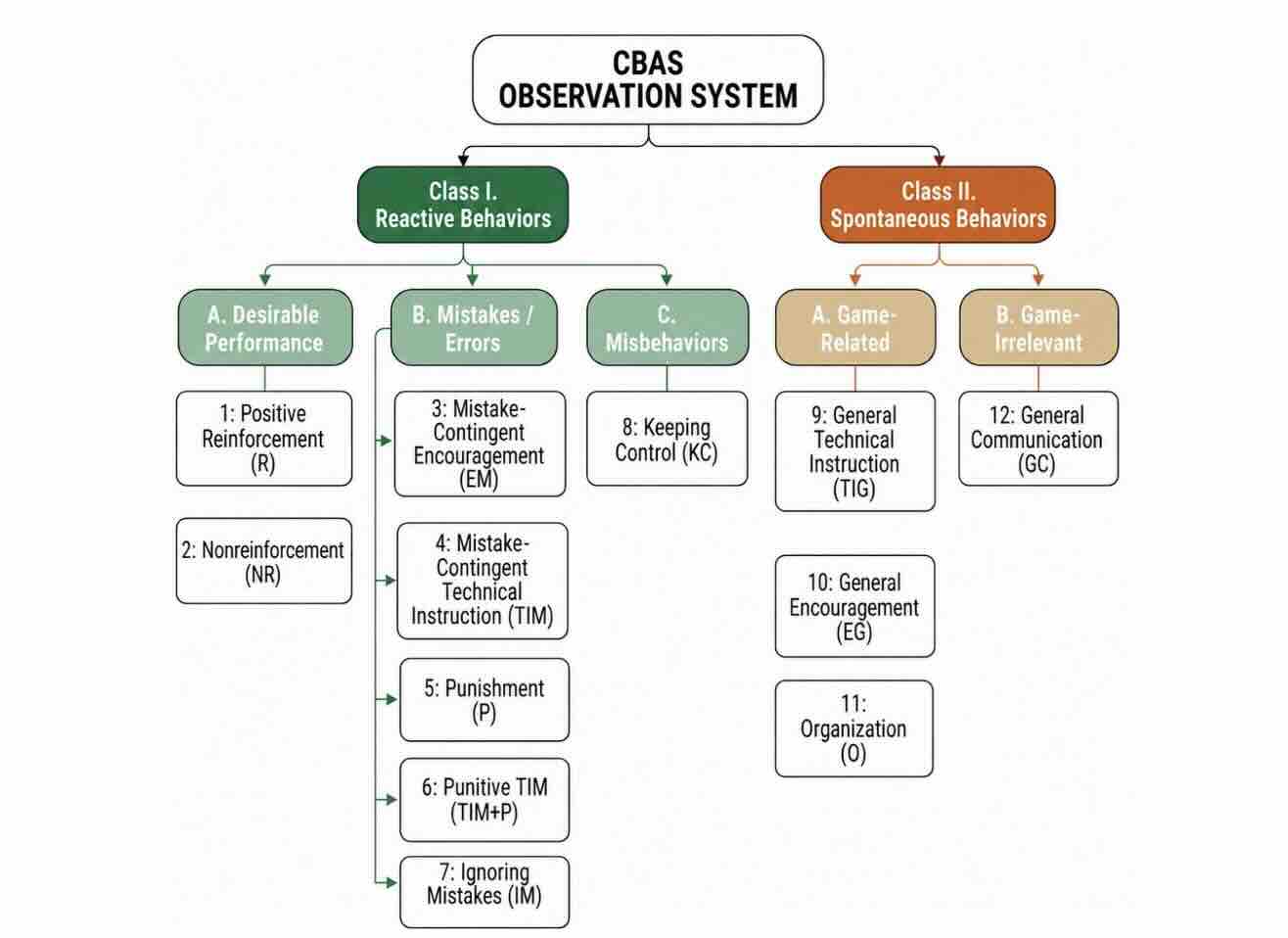
Teaching behaviours, Objective analysis of teaching, Structured objective observation, CBAS observation systemAbstract
The aim of this study was to analyse the teaching behaviours of physical education teachers in the Iraqi school setting using the CBAS teaching behaviour observation system, and to identify the most common behavioural categories and their polarity. The sample consisted of five teachers, and three lessons were observed for each teacher, making a total of fifteen lessons. The observation lasted twenty minutes of the main section of each lesson, divided into eight minutes for the instructional activity involving explanation and presentation, and twelve minutes for the practical activity. Behaviour was coded every five seconds, with two behaviours permitted to be recorded if they occurred within the same time interval. A total of 3,696 behaviours were observed. The results showed that general technical instructions were the most frequent category at 16.23 per cent, followed by error-related technical instructions at 15.83 per cent, then organisation at 11.93 per cent, and maintaining control at 10.88 per cent. Positive reinforcement accounted for 9.82 per cent, general encouragement for 8.28 per cent, and error-related encouragement for 8.12 per cent. Positive and functional behaviours accounted for 70.21 per cent of all behaviours, compared with 15.99 per cent for negative behaviours, whilst general communication unrelated to the activity was the least frequent, at 2.92 per cent. The standardised score values indicate a clear increase in general technical instructions and error-related instructions compared with the average for other classes. The study concluded that the prevailing teaching style was characterised by technical guidance, organisation and lesson control, with a predominance of positive behaviours. The study recommends increasing the use of specific reinforcement and encouragement, providing corrective feedback in a supportive manner, minimising punishment and overlooking mistakes, and incorporating training on the analysis of teaching behaviour and improving the quality of classroom interaction into teacher training programmes. The findings emphasise the importance of striking a balance between clear instructions and providing pupils with opportunities for participation and autonomy, whilst calling for follow-up studies on larger samples that link teacher behaviour patterns to pupil motivation, motor learning and the level of their active participation in organised classroom lessons.
References
Camerino, O., Valero-Valenzuela, A., Prat, Q., Manzano Sánchez, D., & Castañer, M. (2019). Optimising education: A mixed-methods approach oriented towards teaching personal and social responsibility (TPSR). Frontiers in Psychology, 10, Article 1439. https://doi.org/10.3389/fpsyg2019..01439
Castillo, I., Tomás, I., Ntoumanis, N., Bartholomew, K., Duda, J. L., & Balaguer, I. (2014). Psychometric properties of the Spanish version of the Controlling Coach Behaviours Scale in the sport context. Psicothema, 26(3), 409–414. https://doi.org/10.7334/psicothema2014.76
García-Ceberino, J. M., Feu, S., & Ibáñez, S. J. (2019). Comparative study of two intervention programmes for teaching football to school-age students. Sports, 7(3), Article 74. https://doi.org/10.3390/sports7030074
García-Fariña, A., Jiménez-Jiménez, F., & Anguera, M. T. (2018). Observation of communication by physical education teachers: Detecting patterns in verbal behaviour. Frontiers in Psychology, 9, Article 334. https://doi.org/10.3389/fpsyg2018..00334
González-Peño, A., Franco, E., & Coterón, J. (2021). Do observed teaching behaviours relate to students’ engagement in physical education? International Journal of Environmental Research and Public Health, 18(5), Article 2234. https://doi.org/10.3390/ijerph18052234
Kohake, K. (2024). Systematic observation to measure teaching quality in different contexts: Insights from science lessons, physical education lessons, and sports training using the Classroom Assessment Scoring System. Frontiers in Education, 9, Article 1437996. https://doi.org/10.3389/feduc2024..1437996
Mackinney, R. (2025). Examining the use of verbal teacher feedback in physical education lessons. Education Sciences, 15(5), Article 568. https://doi.org/10.3390/educsci15050568
Maldonado, E., Zamarripa, J., Ruiz-Juan, F., Pacheco, R., & Delgado, M. (2019). Teacher autonomy support in physical education classes as a predictor of motivation and concentration in Mexican students. Frontiers in Psychology, 10, Article 2834. https://doi.org/10.3389/fpsyg2019..02834
Mayorga-Vega, D., Martínez-Baena, A., & Viciana, J. (2018). Does school physical education really contribute to accelerometer-measured daily physical activity and non-sedentary behaviour in secondary school students? Journal of Sports Sciences, 36(17), 1913–1922. https://doi.org/10.1080/02640414.2018.1425967
Moreno-Murcia, J. A., Huéscar Hernández, E., & Ruiz, L. (2018). Perceptions of controlling teaching behaviours and the effects on the motivation and behaviour of secondary school physical education students. International Journal of Environmental Research and Public Health, 15(10), Article 2288. https://doi.org/10.3390/ijerph15102288
Smith, R. E., Smoll, F. L., & Hunt, E. B. (1977). A system for the behavioural assessment of athletic coaches. Research Quarterly, 48(2), 401–407. https://doi.org/10.1080/10671315.1977.10615438
Tzioumakis, Y., Michalopoulou, M., Aggelousis, N., Papaioannou, A., & Christodoulidis, T. (2009). Assessment of youth coaches’ behaviour through systematic observation. Inquiries in Physical Education and Sport, 7(3), 344–354. https://doi.org/10.26253/heal.uth.ojs.ispe2009..1338
Van Doren, N., De Cocker, K., De Clerck, T., Vangilbergen, A., Vanderlinde, R., & Haerens, L. (2021). The relationship between physical education teachers’ (de-)motivating style, pupils’ motivation, and pupils’ physical activity: A multilevel approach. International Journal of Environmental Research and Public Health, 18(14), Article 7457. https://doi.org/10.3390/ijerph18147457
Vergara-Torres, A. P., Tristán, J., López-Walle, J. M., González-Gallegos, A., Pappous, A. S., & Tomás, I. (2020). Students’ perceptions of teachers’ corrective feedback, basic psychological needs and subjective vitality: A multilevel approach. Frontiers in Psychology, 11, Article 558954. https://doi.org/10.3389/fpsyg.2020.558954
Downloads
Published
Issue
Section
License
Copyright (c) 2026 Ahmed Ghaleb Yaqoob (Author)

This work is licensed under a Creative Commons Attribution-ShareAlike 4.0 International License.